Hitohira
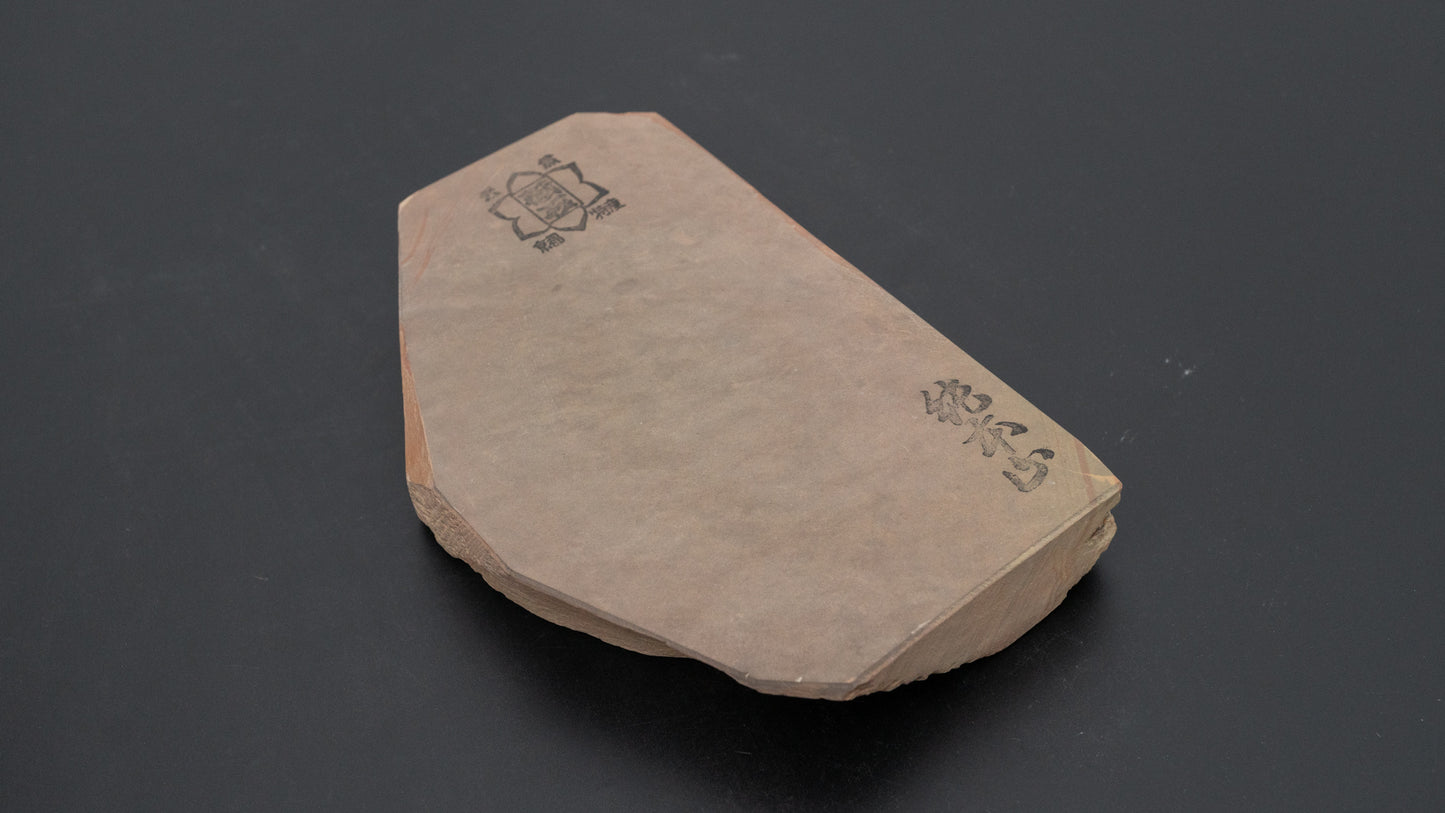
Hitohira Ohira Natural Stone Koppa
Hitohira Ohira Natural Stone Koppa
Couldn't load pickup availability
Description
Description
Koppa are Japanese natural stones offcuts, shapes outside of the usual block or brick dimensions. This does not necessarily mean that the quality is bad but it greatly influences the price.
These Koppas can be a great introduction in natural sharpening and often work perfectly for razors, smaller tools like chisels or even knives.
Natural stones, or JNATS or Tennen Toishi are natural sharpening stones quarried in various mountains in Japan. Made by natural thanks to Japan’s rich sedimentary and geological history. Japan is one of the only countries where such a diverse amount of silica and aluminium oxide rich stone can be found. These two elements give the stones the ability to cut steel in an effective way. The presence of natural sharpening stones is what gave Japan its history of swords and high quality tools. They have incredible historic and cultural value and the world of naturals is as complicated as it is fascinating.
Tennen Toishi can produce result unmatched to any man-made sharpening stone. They last longer, make better edges and can produce amazing polishes.
Rated on size, hardness, fineness, evenness and cutting speed with large, fine, fast and clean stones often being the most desirable.
It is difficult to generalise but some mountains or mines are known to produce certain characteristics. With known origin and layer one can form suitable expectations but each stone should be tested individually.
Jnats are slash ‘n go stones and do not need soaking. Often you’ll see that the high quality stones are sealed with urushi lacquer, or even glued on a little wooden board or stand. This is to provide extra strength since natural stones can be fragile. Do not drop ‘m and seal or support them if not done already.
On this website natural stones are rated with a 1-5 score for hardness, fineness and cutting speed, 5 being hardest, finest and fastest. Weight and dimensions you will also find below.
Natural stones are divided into three groups: Aratoishi (coarse), Nakatoishi (medium) and Awasedo (fine). The rating applied is relative to the category of the stone. A 3/5 fineness Nakatoishi is not as fine as a 3/5 Awasedo.
About Natural Stones
About Natural Stones
Natural sharpening stones, known as JNATs or Tennen Toishi, are quarried from mountains across Japan. These stones are a product of Japan’s unique sedimentary and geological history, which makes them rich in silica and silicon oxide—key elements that enable effective sharpening of steel. When combined with the clay that acts as a binder, the resulting material can vary in cutting speed, depending on the proportions of each component. Japan is one of the few places in the world where such a diverse range of these stones can be found.
The availability of these natural stones has played a crucial role in Japan’s history of swordmaking and the production of high-quality tools. Beyond their practical uses, they also hold significant historical and cultural value. The world of natural sharpening stones is as complex as it is fascinating.
Tennen Toishi stones offer performance that’s unmatched by most man-made sharpening stones. They are known for their longevity, superior edge quality, and the ability to produce exceptional polishes. These stones typically provide better cutting performance and long lasting edges.
Natural stones are evaluated based on size, hardness, fineness, evenness, and cutting speed. Stones that are large, fine, fast, and produce clean finishes are often the most desirable.
While general characteristics can be identified based on the mountain or mine of origin, each stone is unique. Stones from known sources may have predictable qualities, but individual testing is essential to assess their specific performance.
Maintaining a natural sharpening stone is quite similar to caring for a synthetic stone, though there are a few key differences.
Keeping your stone flat is important, but natural stones typically require flattening less often than synthetic ones. When flattening, use the finest flattener possible to minimize unnecessary material removal. After flattening, we recommend polishing the surface with a nagura stone to enhance performance and surface smoothness.
To increase the stone’s longevity, we advise mounting it on a wooden base. This greatly improves the stone’s strength and structural stability. Because natural stones may contain weak spots, reinforcing them in this way helps prevent potential damage and prolongs their lifespan.
Detailed Spec
Brand: Hitohira ひとひら
Product Type: Natural Stone
Size: Koppa
Producing Area: Kyoto/ Japan
Mine: Ohira
Soaking Requirement: Not required
Update: May 23, 2025
Share
*Please understand that all pictures on our website are made of random samples and as most products are made with natural materials by hand. The colour, appearances and even measurements can slightly vary. Please contact us if you wish to see the exact item we have on hand.
View full details